System-Wide Failure in Shelter and Transitional Housing Transition Displaces over 100 Families, Children, Seniors, Disabled Residents, and Domestic Violence Survivors
STATEMENT FROM THE SACRAMENTO HOMELESS UNION
Yesterday, Sacramento experienced a serious breakdown in the coordination of its shelter and transitional housing system, resulting in widespread confusion, displacement, and trauma for families, children, seniors, disabled residents, survivors of domestic violence, and medically vulnerable individuals who had already been placed into shelter or temporary housing programs.
Beginning in the morning hours of June 1, 2026, the Sacramento Homeless Union began receiving urgent calls, text messages, and requests for assistance from residents across multiple City-funded shelter and housing programs overseen by the City of Sacramento and operated through the Step Up on Second system.
Residents reported that they had been told the transition between providers would be smooth, and that a new operator would seamlessly continue the program without disruption. According to those assurances, unhoused residents already placed in shelter or motel-based programs should not have been negatively impacted.
Residents also reported that as early as March they were informed the program “may change,” but received little meaningful detail beyond that. Case managers reportedly also lacked updated information, leaving both staff and residents without clarity about what the transition would actually look like.
However, residents say the reality that unfolded did not match those assurances.
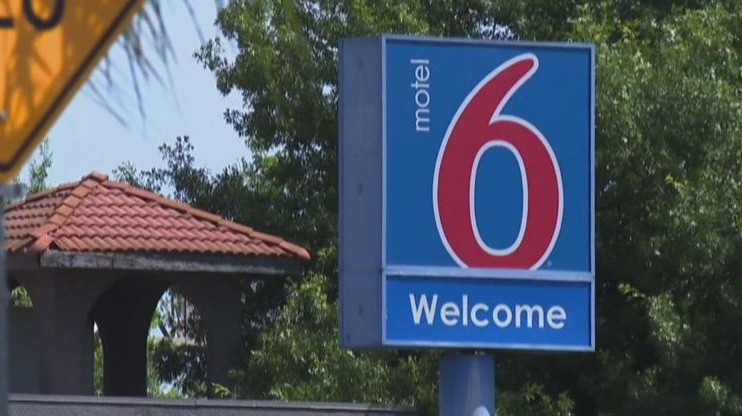
Even as recently as the day prior to displacement, individuals reported being directed to new hotel placements. Yet when they arrived at those locations, they were told they could not be accommodated. In some cases, motel and hotel operators informed residents that certain beds were no longer authorized under City payment agreements, and that the City would not be covering those rooms moving forward. As a result, residents who followed instructions and arrived at assigned locations were turned away without alternative placement.
As the day progressed, two overlapping crises became clear.
First, residents in shelter and motel-based programs reported being instructed to leave at approximately 8:00 a.m. They were told to remove all belongings and return later in the day with the expectation they would regain access to their placements.
They complied.
They left believing they would return.
Many did not.
By mid-afternoon, residents were lining up outside hotels and shelter sites carrying all of their belongings medications, children’s items, and survival supplies only to find that some were not allowed back into rooms, others were not on placement lists, and some were told no space remained available.
Some residents were issued motel vouchers valued at approximately $55 and directed to participating hotels. However, many reported that hotel costs exceeded voucher amounts or that they were denied access due to “do not rent” or exclusion lists, leaving them without viable shelter options.
At the same time, the Sacramento Homeless Union was contacted by residents from a separate but related displacement involving a trailer park site that had been vacated with only two days’ notice. Residents described being left in shock and uncertainty after sudden removal from their housing.
Many of these residents were also issued hotel vouchers but reported being turned away from hotels or told they would need to pay additional costs not covered by the voucher. For families already in crisis, those costs were not possible to meet, effectively cutting off access to shelter.
During this same period, the Sacramento Homeless Union also received a surge of reports from individuals currently placed in hotel-based shelter programs. These residents described similar conditions, including confusion over placement status, inconsistent communication, and uncertainty regarding continued access to shelter.
Together, these overlapping reports indicate not isolated incidents, but a broader system-wide breakdown affecting multiple forms of temporary housing under the Step Up on Second system, overseen by the City of Sacramento.
What emerged was a coordinated failure across shelters, motel placements, hotel programs, and transitional housing sites occurring simultaneously, leaving residents without clarity or continuity of care.
By mid-afternoon, what initially appeared to be separate issues had escalated into a citywide crisis. The Sacramento Homeless Union began receiving an overwhelming volume of calls and messages, while community organizations began coordinating in real time to understand the scale of displacement.
COMMUNITY RESPONSE & COORDINATION
As the situation escalated, the Poor People’s Campaign, Sacramento Regional Coalition to End Homelessness, service providers, and impacted residents worked throughout the day. Sacramento Homeless Union continue to respond throughout the dayand night Gathering information from Shelter residence about what had happened in their personal situations.
We acknowledge all who responded in real time during a rapidly unfolding humanitarian crisis.
We further acknowledge Senator Angelique Ashby and Councilmember Caity Maple for responding after hours and attempting to assist despite limited and rapidly changing information.
At approximately 5:00 p.m., an existing coordination meeting was underway when two impacted residents were brought into the discussion so their lived experience could be directly heard as decision-makers attempted to assess the situation in real time.
Even then, answers remained limited.
During this period, additional reports emerged that residents at one location seeking clarity about their housing status were being threatened with law enforcement intervention, prompting immediate outreach response from advocates.
THE HUMAN IMPACT
Sacramento Homeless Union outreach teams, case managers, and advocates remained in the field across multiple locations as crisis calls continued without pause.
What began as a small number of reports quickly escalated into continuous messages from residents losing shelter or attempting to determine where they would sleep.
Field response continued until approximately 2:30 a.m. on June 2, with teams documenting conditions, collecting statements, and attempting to connect residents with immediate support.
Even after outreach efforts ended, calls and messages continued throughout the night and into the morning.
Throughout this period, advocates witnessed families sitting in parking lots with nowhere to go, children awake long after they should have been asleep, exhausted parents attempting to secure shelter for their children, seniors carrying all of their belongings, disabled residents attempting to survive without stable housing, and medically vulnerable individuals suddenly cut off from the conditions needed to manage serious health needs.
At approximately 12:15 a.m., advocates witnessed a moment that reflects the human cost of this crisis more clearly than any statistic.
A nine-year-old child embraced her disabled mother and said:
“Mama  , I’m so tired. I want to go to sleep.”
She then asked:
“Do you have any blankets? Do you have water to drink?”
Nearby, a 78-year-old resident living with COPD stated:
“I’m a 78-year-old man with COPD and I can’t even plug in my nebulizer.”
Another mother, who had survived domestic violence and rebuilt stability after more than a year of safety, stated:
“I’m fleeing domestic violence. We’ve been safe for a little over a year now. Me and my three children are back out here.”
The individuals impacted ranged in age from four months to 78 years old and included infants, children, seniors, disabled residents, survivors of domestic violence, and individuals with serious medical conditions.
The consequences extended far beyond shelter loss. Residents reported inability to access medical equipment, inability to refrigerate medication, and loss of access to education-related services such as transportation from hotels that are tied to shelter placement and Individualized Education Programs (IEPs).
Many had previously surrendered tents, bedding, and survival supplies due to shelter restrictions and were left without basic survival resources when displaced.
By the end of the day, the Sacramento Homeless Union had directly documented at least 80 displaced residents. Based on the volume of reports, calls, and messages, the total number of impacted individuals may be significantly higher and could reach into the hundreds.
We later learned that residents placed in participating hotel programs were also experiencing similar issues, including confusion over placements, inconsistent communication, and uncertainty regarding continued shelter access.
DEMANDS FOR ACCOUNTABILITY
This was not a natural disaster. It was not an unforeseen emergency.
It was a planned transition involving City of Sacramento oversight and contracted providers with months of lead time that should have included clear communication, coordinated placement, continuity of services, and protections for vulnerable residents.
Instead, it resulted in confusion, displacement, and trauma.
The Sacramento Homeless Union calls on the City of Sacramento and all involved entities to provide a full public accounting, including:
- Communication timelines and protocols
- Number of residents displaced
- Placement decision processes
- Voucher adequacy and usability
- Hotel and shelter contract enforcement practices
- Use of exclusion or “do not rent” lists
- Protections for medically vulnerable residents, children, and survivors of domestic violence
- Immediate steps being taken to rehouse all displaced individuals
CALL FOR SUPPORT
If you were impacted by this displacement or are seeking assistance, please contact the Sacramento Homeless Union via text:
916-495-9026
Multiple residents are also available for interviews upon request
As of 9 o’clock this morning, the city was actively trying to figure out what happened. We are still trying to support folks as well as try to figure out what’s going on.